
5 "Grill Protection" Hacks That Are Actually Destroying Your Grill
You've seen the tips. Spray some WD-40 on it. Rub it down with car wax. Slap a cover on and call it good. The internet is full of people confidently recommending grill protection hacks that sound reasonable — until you understand what's actually happening to your grill's exterior when you follow them.
Here's the uncomfortable truth: most of the so-called protection methods people swear by either do nothing, wear off almost immediately, or actively make things worse. And the real kicker? The one thing that actually works is something most grill owners have never heard of.
Let's break down the five most popular grill protection methods — and why each one is failing you.

1. The Grill Cover Trap
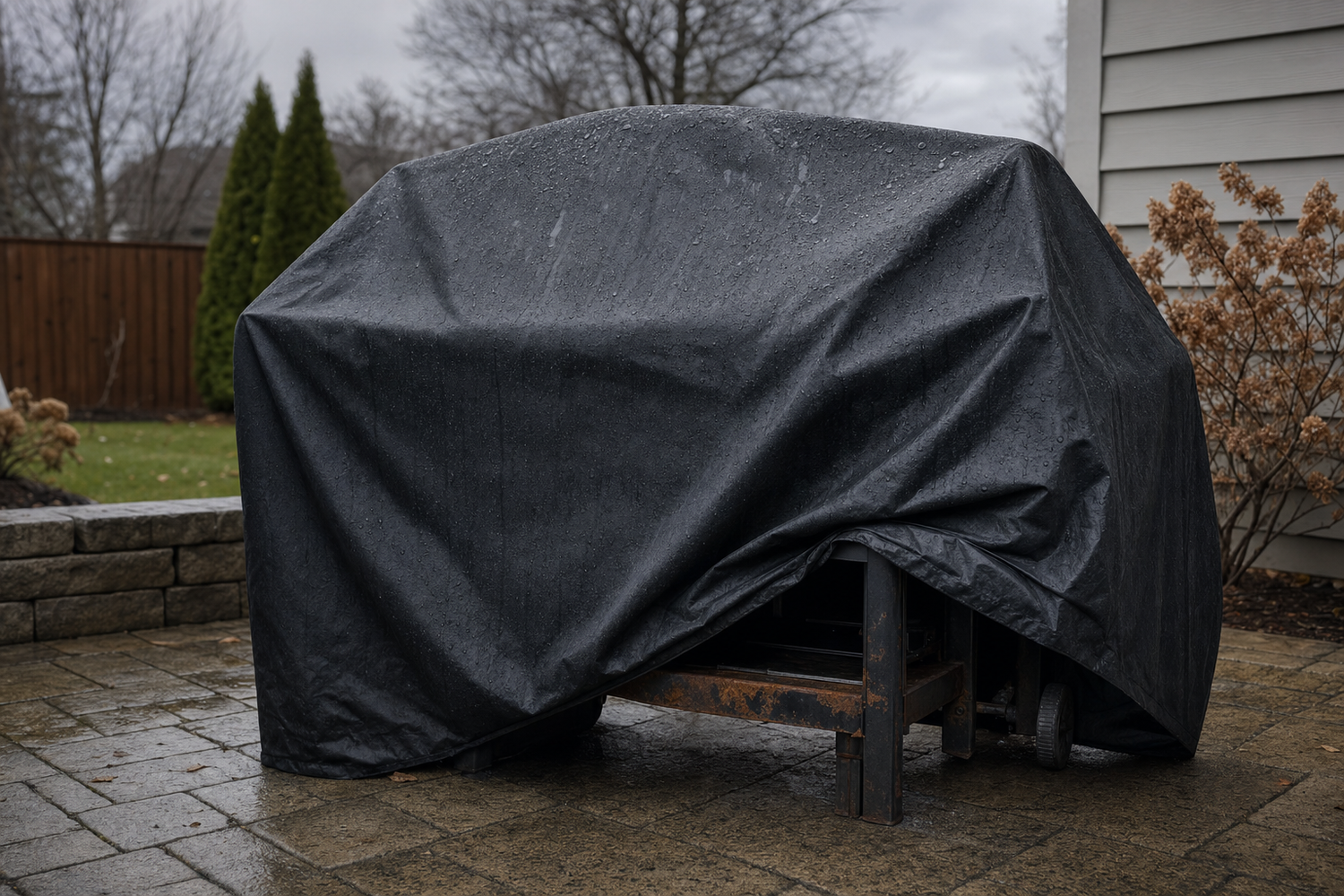
This is the big one. You bought a $40 cover. You put it on religiously after every cook. You feel responsible. But here's what's happening underneath that cover: moisture is getting trapped, condensation is forming on every metal surface, and your grill is slowly rusting from the inside out — while you think you're protecting it.
Grill forum veterans have reported this for years. Covers don't breathe well enough to let moisture escape, especially in humid climates. You pull the cover off and find water droplets sitting on the lid, the firebox, the cart. Every single one of those droplets is a rust factory working overtime. A cover keeps rain off, sure — but it creates a greenhouse for corrosion.
2. High-Heat Spray Paint: The Band-Aid That Peels
Your grill's finish is chipping, so you grab a can of Rust-Oleum High Heat paint from the hardware store. Sand, spray, cure at 450 degrees for an hour. Looks great for about three weeks.
Then reality hits. The paint starts flaking at stress points — around hinges, where the lid meets the body, anywhere that flexes. Experienced builders on BBQ forums admit that high-heat paint is "garbage" for long-term durability and "will flake or scratch real easy." The surface prep matters more than the paint itself, and most people don't sand, degrease, and prime well enough to get real adhesion. You end up repainting every season, which means you're not protecting your grill — you're maintaining a paint job.
3. Car Wax: Melts Before Your First Burger
Some grill manufacturers actually suggest waxing stainless steel exteriors with car wax. Sounds logical — it works on your truck, why not your grill? Because your truck doesn't hit 500 degrees.
Carnauba wax and synthetic sealants evaporate at grill temperatures. Detailing experts have pointed out that once your grill surface reaches 500-600 degrees during a burn-off or cleaning cycle, that wax is gone. Worse, it can leave discoloration and a hazy residue behind. So you've spent 20 minutes applying a product that disappears the first time you fire up, and now your grill looks worse than before you started.

4. Cooking Oil: Rust Protection That Rots
The classic advice: after every cook, wipe down your grates and exterior with vegetable oil to create a protective barrier. For grates, this has some merit — polymerized oil seasons the cooking surface. But for exteriors? You're coating painted or powder-coated metal with a substance that goes rancid, attracts dirt, and washes off in the first rain.
Cooking oil is a temporary, partial fix that demands constant reapplication. Miss a session? Moisture gets in. Forget for a week? Rust starts. It turns grill maintenance into a chore you have to repeat after every single use, and it still doesn't protect against UV damage, salt air, or temperature cycling.
5. WD-40: The Multi-Purpose Myth
WD-40 even markets itself for grill use, recommending their Specialist Silicone Lubricant to "waterproof and protect" your grill's lid. And sure, WD-40 displaces water temporarily. That's literally what the name means — Water Displacement, formula 40.
But it's a lubricant, not a protective coating. It evaporates. It washes away. It leaves an oily film that collects dust and grime. Using WD-40 on your grill exterior is like putting a band-aid on a broken bone — it addresses a symptom for about five minutes while the actual problem keeps getting worse.
So What Actually Works?
Every method above shares the same fatal flaw: they're temporary. They sit on the surface without bonding to it, and they break down under the exact conditions your grill faces — heat, moisture, UV, grease, and temperature swings.
This is why Grillacoat exists. It's a ceramic protective coating engineered specifically for grill, smoker, and griddle exteriors. Unlike wax that melts or paint that chips, ceramic coating chemically bonds to the surface at a molecular level. It doesn't evaporate at high temps. It doesn't trap moisture. It repels grease, blocks UV, and prevents rust and corrosion — for years, not days.
The application takes ten minutes. You wipe it on, and it creates a hydrophobic, heat-resistant shield that handles everything your grill's environment throws at it. No reapplication after every cook. No seasonal repainting. No crossing your fingers every time it rains.
The reason most grill owners have never tried this is simple: until now, nobody made a ceramic coating purpose-built for the non-cooking surfaces of grills, smokers, and griddles. The auto and marine industries have used this technology for years, but those products weren't designed for the grease, heat cycles, and outdoor conditions a grill faces. Grillacoat was -- and once you see what actual surface protection looks like, every hack on this list starts to feel like a joke.
Stop babysitting temporary fixes. Protect your grill once and move on to what matters -- the cook.