
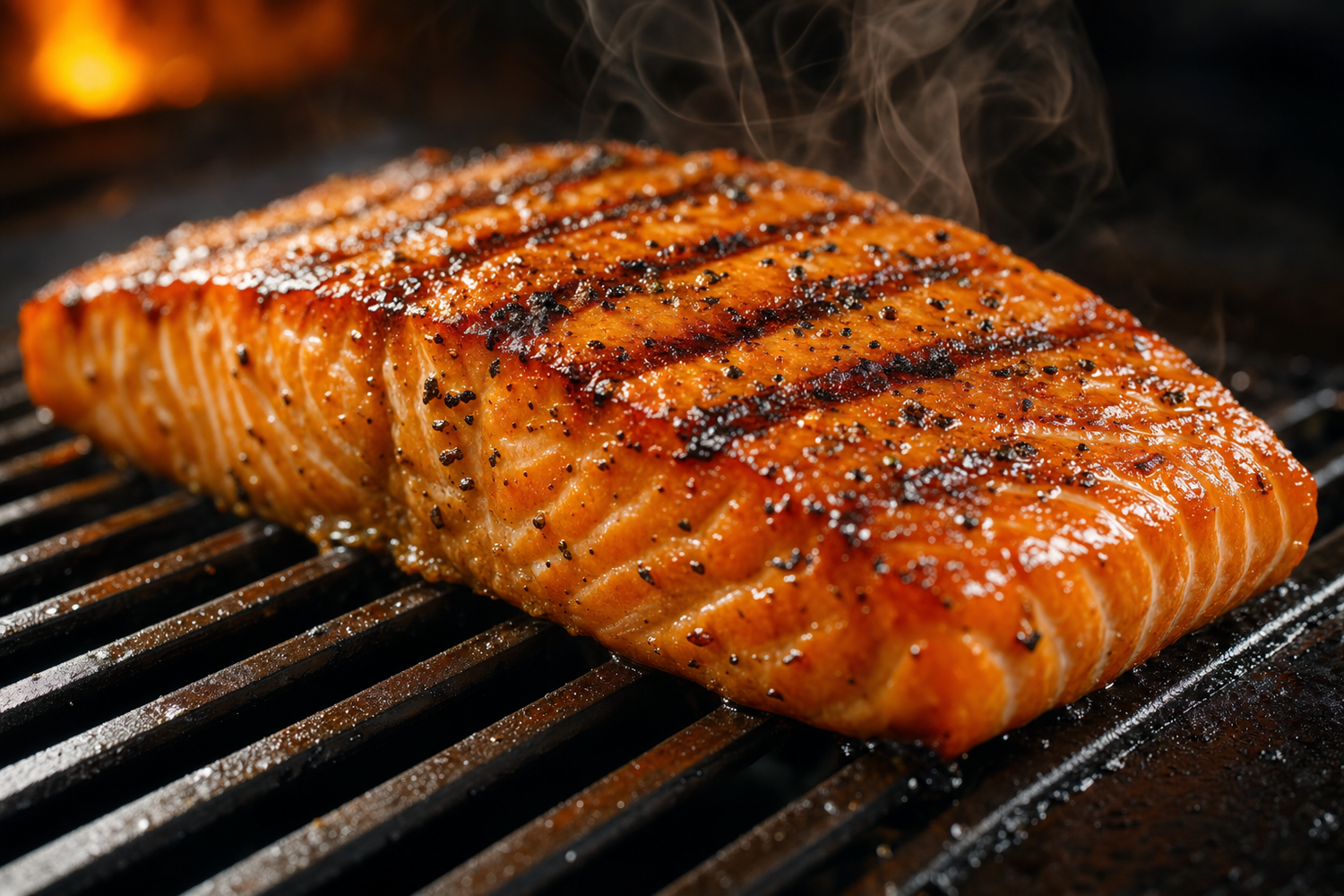
You have probably watched a perfectly good salmon fillet weld itself to the grates and tear into three pieces when you tried to flip it. You oiled the fish. You oiled the grates. You followed every rule. It still glued itself down like the grates were trying to keep it.
Stop using oil. Brush a thin layer of plain mayonnaise on the fish instead. Skin side, flesh side, both. The salmon will release in one piece, sear with a deeper Maillard crust than oil can produce, and taste exactly like salmon -- no trace of mayo flavor by the time it hits the plate. This is one of those backyard tricks that sounds wrong and is chemically perfect.

Why Oil Fails on the Grill
Oil is hydrophobic. The flesh of a fish, a chicken breast, a steak -- they are mostly water. When you brush oil on a wet protein, the oil refuses to bind. It slides into the lowest spots, drips off the high spots, and the first thirty seconds on a hot grate burn off most of what you applied. Whatever remains runs into the fire as drippings and flares up.
That is why fish sticks. You think you have a non-stick layer between food and metal. You actually have a thin smear of vaporized oil and a lot of bare protein touching 500-degree steel. The protein bonds chemically to the iron, and now you are fighting physics with a spatula.
Why Mayo Wins
Mayonnaise is an emulsion -- microscopic droplets of oil suspended in egg yolk and a touch of vinegar, held together by lecithin. The structure changes everything.
Per a Los Angeles Times piece citing Greg Blonder, a Boston University engineering professor and co-author with AmazingRibs founder Meathead Goldwyn, mayo works for three reasons most home cooks have never had laid out:
It actually sticks to wet protein. The egg yolk lets the emulsion grab onto the surface of the fish in a way pure oil cannot. The coating stays where you put it.
It is a time-release oil capsule. As the surface heats, the emulsion breaks down slowly and releases oil exactly when and where the food needs it. Instead of one early burst of oil that runs into the flames, you get a slow, steady barrier across the entire cook time.
It browns chemically, not just thermally. Mayo brings sugars and proteins to the surface along with the fat. That triggers the Maillard reaction -- the same caramelized-protein browning that makes a steakhouse sear look the way it does. Plain oil only browns by transferring heat. Mayo browns by reacting.
The Food Network describes the practical result in one sentence: "the mayo is thick enough to adequately stick to the fish and create a barrier between the fish and the grill. That barrier is what prevents it from sticking." The flavor cooks off completely.
The Technique

Pat the salmon completely dry. Dry skin and flesh are non-negotiable -- any moisture defeats the purpose. Pin bones out, room temp for 15 minutes if you have time.
Spread a very thin layer of plain mayonnaise on every surface that will touch the grate. "Thin" is the keyword. You are not coating a sandwich. You want the visible sheen of a barrier, not a glob. Salt and pepper after the mayo goes on -- the seasoning sticks better that way.
Get the grates to 450-500 degrees. Brush them clean. Lay the salmon down skin side first at a 45-degree angle to the bars for crosshatch grill marks. Close the lid. Walk away.
Six to eight minutes later, slide a thin metal spatula under one corner. If the fish lifts cleanly, it is ready to flip. If it sticks, give it another sixty seconds. The sear is your timer -- when the Maillard layer has fully formed, the fish releases on its own.
Flip once. Two to four minutes on the flesh side until an instant-read thermometer reads 125 in the thickest part. Pull it, rest two minutes, serve. Carry-over heat finishes the cook.
Where Else This Works
The same trick rescues chicken breasts -- easy to dry out, easy to glue to a grate. Mayo on the breast before it goes down, and the result is restaurant-juicy with browning home cooks rarely get. Blue Plate Mayonnaise's technique guide covers fish, chicken, and beef the same way.
You can infuse the mayo too. Stir in lemon zest, dijon, miso, chipotle, garlic, or herbs. The emulsion holds those flavors against the protein the whole cook, then evaporates and leaves the seasoning behind.
The Maintenance Side Most Pitmasters Skip
Mayo on the grates is a different story. Some ends up there no matter how careful you are. Long term that residue cooks onto the bars and seeps onto firebox surfaces, side shelves, and the lid where it bakes into a film that destroys finishes.
Factory finishes on most grills give up within two summers from this kind of splatter. A sealed surface like Grillacoat on the lid, firebox face, and side shelves means baked-on residue wipes off instead of etching in. Cook like restaurants cook without paying for it in finish damage.
Try mayo on your next salmon. Then lock in the grill itself: Grillacoat.