
The most common grill-cleaning tool in America is also one of the most dangerous items in your backyard. A 2026 epidemiology study documented 3,739 emergency-room visits from wire-bristle ingestion between 2015 and 2023 -- more than double the rate documented in the prior decade -- with 2024 estimates climbing toward 1,700 cases in a single year. Medical professionals widely agree the actual number is higher because many cases go unreported or unrecognized at the time of injury. Research published in the American College of Surgeons journal has tracked this hazard for over a decade. The CDC issued a public warning about it as far back as 2012, and the American Medical Association repeated the warning years later -- yet wire bristle brushes are still the default tool sold at every hardware and big-box store.
The mechanism is straightforward and unpleasant. A wire bristle breaks off during cleaning, embeds in the grill grate, adheres to food during cooking, and gets swallowed. Bristles have been found embedded in patients ranging from age 10 months to 92 years. The injuries -- lacerations to the throat, stomach perforation, bowel perforation requiring emergency surgery -- are disproportionately severe relative to how accidental and invisible the hazard is.

Why Bristles Break Off in the First Place
Wire bristle brushes degrade with use. The individual wires weaken at the attachment point where they are twisted or welded into the brush head. Heat cycling from a hot grill accelerates metal fatigue. An older brush, used aggressively on rough grate surfaces, sheds bristles at a higher rate than a new one -- but even new brushes can lose wires during normal use. There is no visual indicator that a bristle has broken off and transferred to the grate.
According to a case series published in the American Journal of Case Reports, ingestion is most common in the oral cavity and oropharynx, meaning the bristle is often stuck in food rather than visible on the grate. The patient does not know they have ingested a bristle until pain begins -- sometimes hours later, sometimes days later when perforation occurs.
The Alternatives That Actually Work
The good news: you do not need wire bristles to clean a grill grate effectively. Here are the methods that work without the risk.
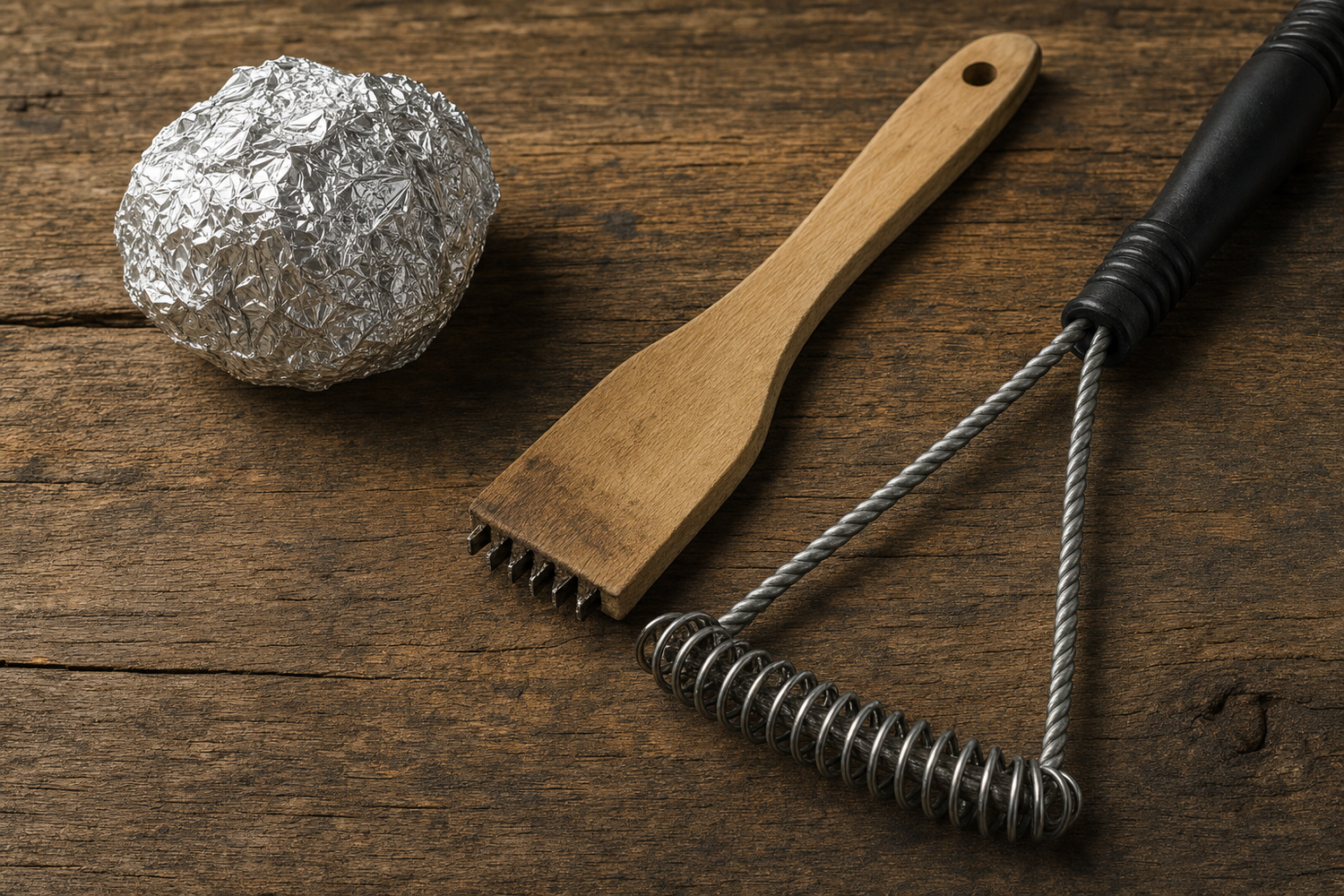
Balled-up aluminum foil. Crumple a sheet of heavy-duty foil into a tight ball, grip it with tongs, and scrub the hot grate with it. The foil conforms to the grate geometry, gets into the grooves, and removes char and grease effectively. No bristles, no fragments that are not immediately visible. This is consistently the top-rated method in grill owner communities for safety and effectiveness.
Wooden grill scrapers. These are flat wooden tools that conform to grate shape over use. The wood wears into the grate grooves, creating a custom-fit scraper that removes debris without wire. No metal fragments, no bristle risk.
Bristle-free coil brushes. Several manufacturers now make brushes with coiled stainless wire instead of individual bristles. The coil does not shed individual filaments the way a bristle bundle does. The cleaning action is mechanical rather than shedding-based.
Grate-level steam cleaning. Dampen a folded cloth or grate brush with water and apply it to a very hot grate. The steam loosens carbon deposits. Follow with a dry wipe using tongs and a folded cloth.
Nylon bristle brushes for cool-grate cleaning. Nylon does not shed metal fragments. For post-cook cleanup on a cooled grate, nylon brushes are a safe alternative, though they are less effective at high temperatures where the bristles can melt.

Why the Hazard Gets Ignored
Wire bristle brushes cost $4 to $12. They work quickly. The risk is invisible until it is not -- the classic profile of an underappreciated hazard where the harm is rare relative to uses, highly severe when it occurs, and invisible at the moment of exposure.
The CDC's advisory on wire bristle grill brush injuries explicitly recommends examining the grill surface before cooking and considering alternative cleaning methods. The AMA agrees. The American College of Surgeons published case literature calling for regulatory action. None of that has moved the retail market, because the brushes are cheap and familiar.
Where Grillacoat Changes the Calculus
There is a secondary reason to care about the cleaning method beyond the immediate injury risk: grate and lid cleaning frequency directly affects how badly your grill exterior degrades over time.
Grills that are easier to clean get cleaned more often and more thoroughly. When the interior surfaces -- lid liner, side walls, drip areas -- have a ceramic barrier applied like Grillacoat, grease and carbon do not bond to the base metal. A coated surface wipes clean. That means you are not scrubbing -- you are wiping -- which removes the need for any aggressive cleaning tool entirely on those surfaces.
On protected surfaces, a damp cloth handles what used to require a brush. On unprotected metal, char bakes into a layer that requires aggressive scrubbing that eventually means reaching for a wire brush. The coating reduces the problem that creates the hazard.
The Practical Bottom Line
Retire your wire bristle brush. Replace it with balled-up foil and a wooden or coil scraper. Inspect grates before cooking regardless of what tool you used.
Grillacoat ships free with a 30-day money-back guarantee. Apply once, wipe clean for years.