
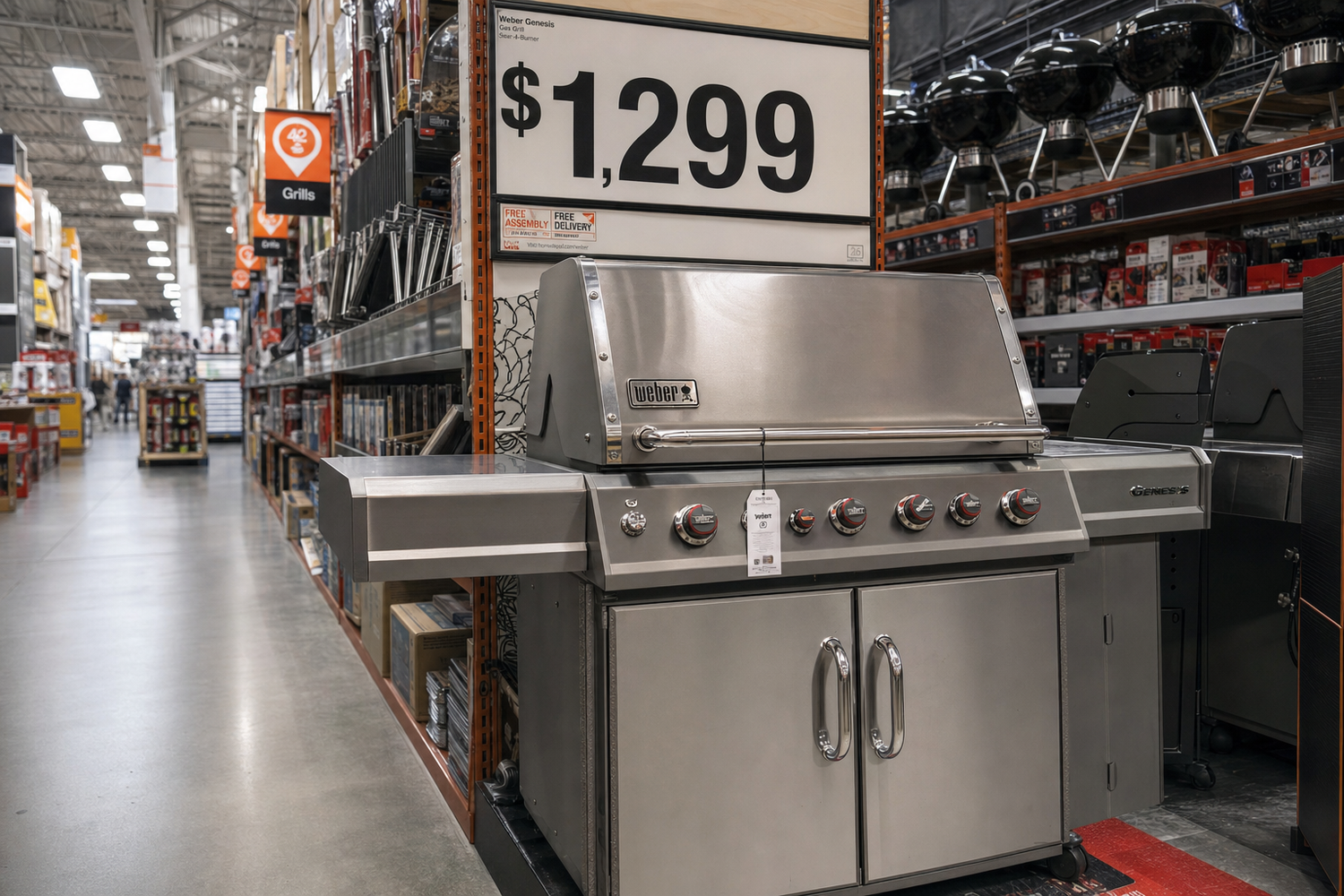
If you replaced a mid-tier gas grill in early 2024 and looked up the same model today, the number on the tag would be noticeably higher. This is not inflation in the general sense. It is a direct consequence of two years of cascading metal tariffs hitting the single most metal-intensive product most homeowners buy for recreation. The math of grill ownership has shifted, and most backyard grillers have not done the calculation yet.

Where the Price Increase Comes From
In early 2025, the U.S. reinstated 25% tariffs on all imported steel and aluminum under Section 232 -- applying to Canada, Mexico, the EU, and virtually every other trading partner with no carve-outs. By June 2025, those tariffs escalated to 50% on steel and aluminum and their derivatives. Grills are derivative products: they are fabricated from steel and aluminum sheet, cast aluminum components, and steel burner assemblies.
The Yale Budget Lab's April 2026 tariff analysis puts the current pre-substitution average effective tariff rate at 11.8% across all consumer goods -- the highest since the early 1940s. For metal-intensive consumer products like grills, the impact is substantially higher than the average, because the input materials face the full weight of the Section 232 rates before any other tariffs are applied.
The calculation is straightforward: a $365 mid-tier gas grill in early 2024 runs $450 or higher through most retail channels in 2026. That is a 23% cost increase in 18 months -- not from feature additions or quality improvements, but from input cost passthrough on the metal content.
The ROI Shift on Grill Protection
At $365, spending $119 on a ceramic protective coating represented 33% of the replacement cost -- a meaningful number that required some justification. At $450 and rising, the math changes. That same $119 protection spend is now 26% of replacement cost, and the ROI case strengthens further with each dollar of retail price increase.
But the more important number is lifespan extension. A mid-tier grill with no exterior protection typically shows significant cosmetic degradation in years two and three -- powder coat chalking, surface rust on uncoated panels, lid finish breakdown from UV cycling. Cosmetic degradation leads to accelerated corrosion because damaged surface finish exposes bare metal. The average unprotected mid-tier grill is functionally replaced within five to seven years, even if the burners and grate hardware could run longer.
Add three years to that lifespan through proper exterior maintenance and a durable ceramic coating, and you have converted a $450 asset from a 5-year useful life to an 8-year useful life. The math: $450 amortized over 5 years is $90 per year. Over 8 years with a $119 coating investment, the total cost is $569 amortized over 8 years -- $71 per year. That is a 21% reduction in annual cost of ownership from a single 10-minute application.
Why Grill Prices Are Not Coming Down
The tariff structure as of 2026 has become embedded. Unlike general import tariffs that can be renegotiated country by country, Section 232 national security tariffs operate under a different legal framework -- they are applied unilaterally and modified by executive proclamation rather than trade negotiation. The Section 232 tariff restoration in February 2025 closed the exemptions that had allowed partner-country steel and aluminum to enter at lower rates. That closure applies broadly and is not subject to the standard trade agreement review process.
Domestic grill manufacturers who source American steel are not exempt from cost pressures either. Domestic steel prices rose alongside the tariff increases as foreign competition was suppressed, narrowing the theoretical advantage of domestically sourced materials. The overall effect is an industry-wide floor on input costs that shows no near-term reversal signal.

The Shrinkflation Angle
Some of the cost absorption has not shown up in sticker prices but in material changes. Thinner gauge steel on side panels, lighter lid hardware, reduced burner thickness, and narrower grate bars are the levers manufacturers pull when they cannot pass the full input cost increase to retail prices. A grill that retails for the same price as the 2022 version may have materially thinner exterior panels -- which means it will show surface damage faster and is more vulnerable to heat-cycling deformation over time.
Thinner panel steel is more susceptible to surface corrosion once the powder coat is compromised, and the degradation accelerates faster on thinner substrates because there is less metal between the damaged surface and structural failure.
The Practical Conclusion
If you bought a grill in the last two years, you paid more than you would have paid in 2023. If you replace it on the current replacement cycle -- unprotected, 5-6 years -- you will pay more still. The protection calculation is not complicated: Grillacoat applied once in year one and maintained annually extends the useful finish life of the exterior panels significantly, delaying the replacement decision by years. At current replacement costs, every year you add to a grill's service life is worth $75 to $90 in deferred capital expenditure. That is the grill math in 2026.