
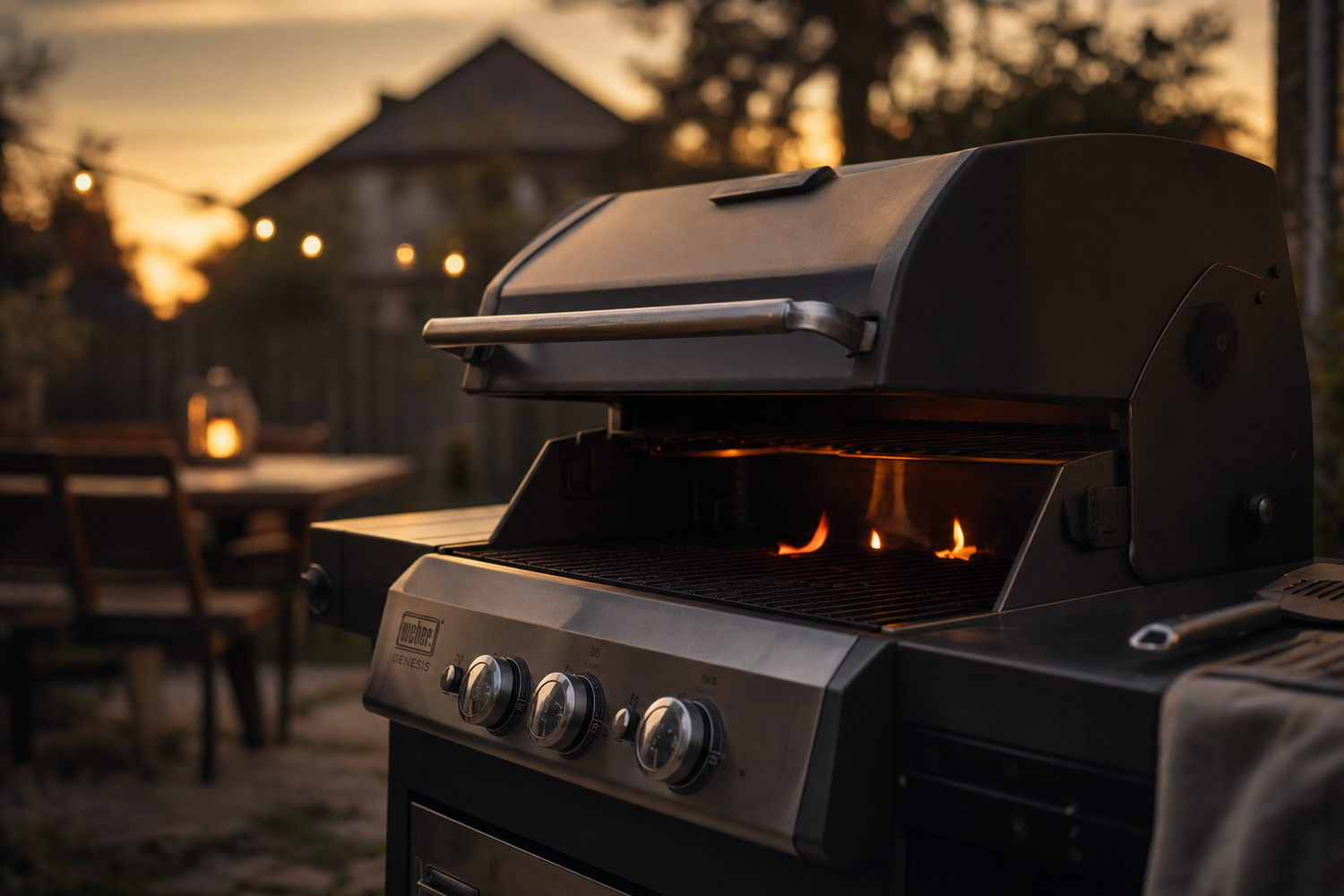
You fire up the grill, crank every burner to high, and twenty minutes later the lid thermometer is sitting at 350. The steaks need 550 to sear. You blame the tank, the burners, the grill itself. Then you start shopping for a new one.

You probably do not need a new grill. You need to reset your regulator. There is a tiny safety mechanism inside every propane regulator built since 1995 that locks your grill into a low-flow state called bypass mode. Once it triggers, the grill physically cannot get hot -- no matter what you do at the burner knobs -- until you release it.
This is the single most common gas grill problem in America. Most owners never figure it out -- Weber publishes a guide on it because the service line gets the call so often.
What Bypass Mode Actually Is
Every propane regulator built in the last three decades contains an excess-flow valve. It is required by code. The valve is designed to detect a sudden surge of gas -- the kind you would see if a hose ruptured or a fitting blew off -- and choke flow down to a trickle to prevent a fireball.
The valve cannot tell the difference between a ruptured hose and you turning the tank valve open too fast with a burner knob already in the on position. From the regulator's point of view, those look identical. Gas rushes through, the valve slams shut, and now your grill is getting a fraction of the fuel it needs. The burners light. The flames look almost normal. The grill just refuses to climb above 250-400 degrees.
This is bypass. And almost nobody knows it exists.
The 60-Second Reset
You can release bypass mode in under a minute. The procedure, per Nexgrill's official regulator reset guide:
1. Turn every burner knob to off. Every one. Side burners, rear burners, main burners.
2. Turn the propane tank valve fully off.
3. Disconnect the regulator coupling nut from the tank. Counterclockwise.
4. Wait 60 seconds. The valve resets when pressure equalizes.
5. Reconnect the regulator. Hand tight is fine -- never use a wrench on these fittings.
6. Open the tank valve slowly. This is the part that matters. Turn it a quarter turn, pause, then continue. If you spin it open fast, you will retrigger bypass and have to start over.
7. Light the burners normally.
Your grill should now hit 550-600 within a few minutes. If it does not, the regulator itself is likely failing -- a $35 part on most grills.
The Habit That Triggers Bypass in the First Place
You can prevent bypass forever by changing one habit: always open the tank valve first, with every burner knob in the off position, and open the valve slowly. Most people do the opposite. They walk up, twist a burner knob to high while they are still thinking about lunch, and yank the tank valve open in one motion. That is the move that locks the regulator.

The other trigger is leaving the tank valve cracked between cooks. Pressure drops overnight, you reopen it the next day, and the surge feels like a leak to the regulator. Close it fully every time.
Why This Matters Beyond the Sear
Owners who do not know about bypass mode tend to do two things that destroy their grill from the inside out.
First, they crank every burner to maximum and leave them there for 30-40 minutes trying to force heat the regulator will not deliver. That much sustained high-position flow, even when choked, runs the burner tubes hotter at their tips than the system can handle. Tubes warp. Igniters bake out. Knob shafts seize.
Second, they assume the grill is dying and switch to harsher cleaning -- wire brushes, oven cleaner, abrasive pads on the lid -- trying to "fix" what is actually a fuel problem. That is when the exterior finish goes. Lid chrome bubbles. The powder coat on the firebox lifts. Stainless side panels heat-tint and never come back.
This is where surface protection pays for itself. A grill with a proper protective coating like Grillacoat on the exterior surfaces survives the kind of misuse that comes with a misdiagnosed bypass problem. The finish stays intact while you figure out the real issue. When you finally reset the regulator and start cooking hot again, you still have a grill that looks like the one you bought.
The Diagnostic Order Every Owner Should Memorize
Before you ever blame the grill itself, run through these three checks in this order. Bypass reset first -- it is free and takes 60 seconds. Burner tube cleaning second -- spider webs and dauber nests in the venturi tubes are the second most common cause of low-flame issues, and they cause flashback fires when ignored. Regulator replacement third -- $35 part, twenty minutes with two wrenches.
Nine times out of ten you stop at step one. The grill you thought was dead just needed sixty seconds and a slower hand.
Keep the body of the grill protected with a coating built to outlast every burner you will ever replace, and you will own one grill instead of three over the next decade. Start here: Grillacoat.