
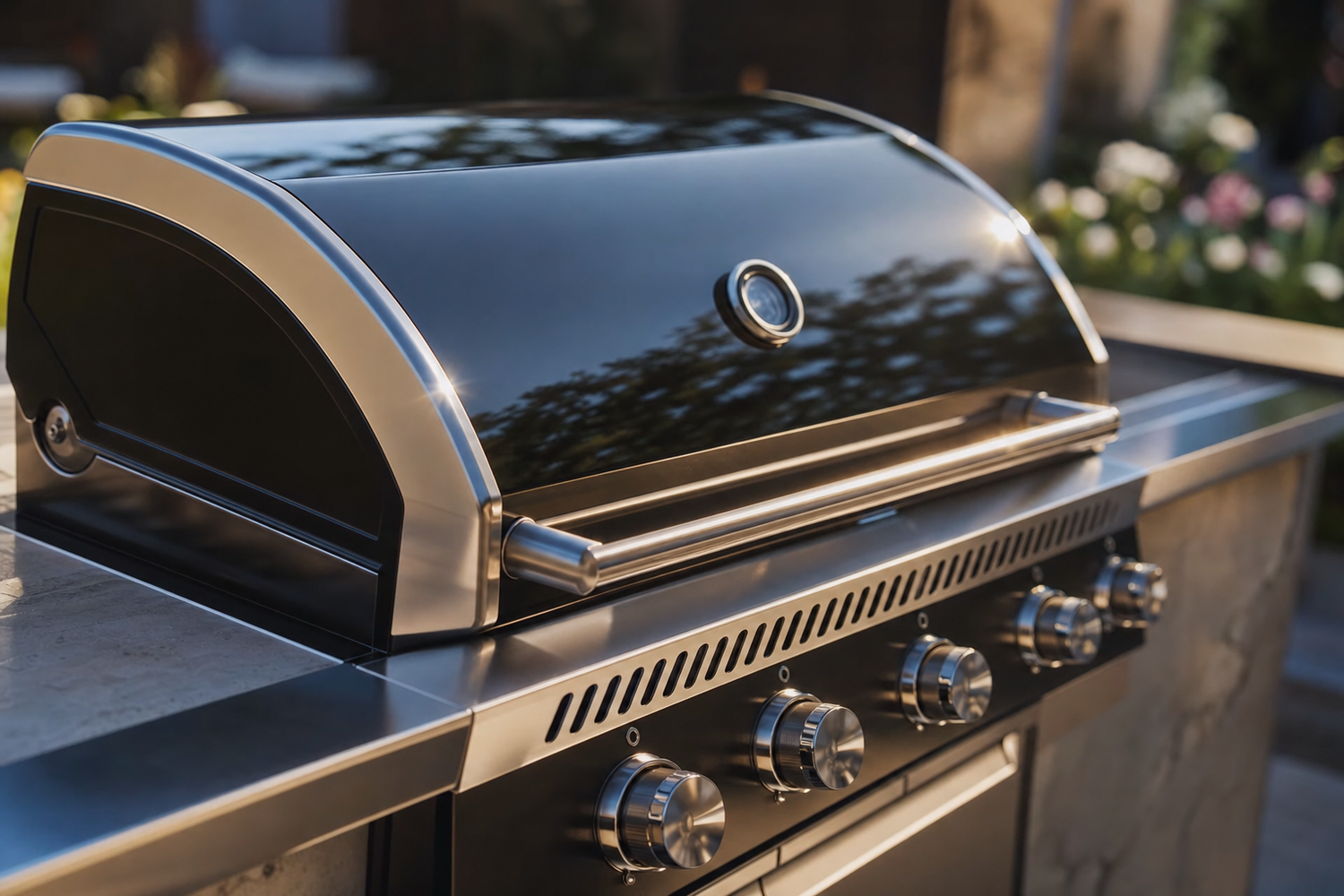
Here is a number that stops most grill owners cold: a professional ceramic coating for a mid-size sedan runs $1,200 to $2,500. That same chemistry -- the same silicon dioxide compound that bonds to metal and creates a slick, UV-resistant, hydrophobic barrier -- is sitting in a $119 bottle designed for your grill. No shop appointment. No two-day wait. No $400 upcharge for paint correction. Same technology. Completely different math.
The question worth asking is obvious: what exactly are you paying for at the detailing shop?

The Cost Is in the Labor, Not the Chemistry
According to professional detailers at Detailed Image, a single-stage paint correction on a standard sedan takes 2.5 to 3 hours of polishing alone, before a drop of ceramic coating touches the car. A two-stage correction -- which most shops perform before applying any premium coating -- can run 8 to 12 hours. That labor is billed at professional shop rates, and it accounts for the vast majority of your $1,500+ invoice.
According to Autotrader's pricing guide, coating all exterior surfaces of a new sedan runs approximately $1,350, and that assumes the paint is in good condition. If your car has swirl marks, oxidation, or surface scratches, the paint correction upcharge alone can push the total past $2,500.
The ceramic coating product itself? A professional-grade 50ml bottle costs roughly $30 to $150. The rest is time.
Why Cars Need Paint Correction and Grills Do Not
Automotive clear coat is a layered system -- primer, base coat, clear coat -- and any ceramic coating applied on top of surface imperfections will lock those imperfections in permanently. A professional detailer has to machine-polish the clear coat to optical flatness before coating. That is the craft and that is the cost. Skip it and you are sealing scratches under glass.
A grill's powder coat, porcelain enamel, or stainless steel exterior does not work the same way. There is no transparent clear coat to worry about. Grill surfaces are textured, matte, or brushed -- finishes that accept ceramic bonding without the micro-correction step. Clean the surface, wipe on the ceramic, let it cure. The entire process takes around 10 minutes per panel.
This is why Grillacoat can exist as a consumer product at consumer pricing. The chemistry is not simplified -- it bonds at the molecular level to powder coat, porcelain enamel, stainless steel, and cast aluminum just as automotive ceramic bonds to clear coat. The application complexity is simply much lower because you are not correcting a multi-layer paint system first.

The Chemistry Is Genuinely the Same
Both automotive-grade and grill-grade ceramic coatings share the same core mechanism: silicon dioxide (SiO2) in a carrier solution cross-links and polymerizes on the metal surface when cured, forming a hardened glassy layer. That layer repels water, resists UV degradation, blocks grease adhesion, and prevents oxidation at the surface level.
According to Optimum Polymer Technologies, SiO2 ceramic coatings create this protective bond regardless of substrate -- the difference between product lines is primarily longevity and thickness, not the bonding mechanism itself. The same hydrophobic barrier that keeps road grime off your car's hood keeps baked-on grease and rain from etching into your grill lid.
The grill environment actually adds one challenge automotive coatings never face: high heat cycles. A properly formulated grill coating needs to handle the thermal expansion and contraction of metal during repeated use. That is a specification a grill-specific product like Grillacoat is engineered for -- standard automotive ceramic coatings are not.
The Real Comparison: What Happens Without It
A car without ceramic coating gets washed, waxed, or detailed periodically. Without protection, the paint oxidizes, clear coat fails, and resale value drops -- but the timeline is slow. Cars live in garages.
A grill lives outside year-round, exposed to UV, moisture, grease, salt air, and temperature swings that no car sees in normal use. Powder coat finishes chalk and fade. Stainless steel develops surface rust. Porcelain enamel crazes from thermal stress. The degradation that takes 10 years on an automotive finish can happen in 2 to 3 seasons on a grill that sees full outdoor exposure without any surface protection.
The auto detailing industry built a $14 billion business around the idea that protecting a finish is worth paying for. Grill owners have been leaving the same protection logic on the table for decades -- and Grillacoat is the first DIY consumer ceramic engineered specifically for the non-cooking parts of grills, smokers, and griddles.
The Math That Actually Matters
A mid-range gas grill costs $400 to $800. A professional ceramic coat on a car protects a $25,000 to $75,000 asset. On a percentage basis, $119 for a Grillacoat application that extends a $600 grill's finish life by several years represents a return most financial advisors would approve of. A car owner who spends $1,500 on ceramic coating is spending 2 to 6% of asset value. A grill owner spending $119 is spending 15 to 30% -- but the grill without protection fails in 3 to 4 seasons; with a proper ceramic barrier, it holds its finish and function for significantly longer.
Same chemistry. Fraction of the labor. The math on the grill is actually better.
If you own a grill worth protecting, Grillacoat ships free with a 30-day guarantee -- made in the USA, and ready to apply in the time it takes your grill to preheat.