
The 24-Hour Cure Window That Decides Whether a Ceramic Grill Coating Lasts Three Seasons or Three Months
Apply tonight for Father's Day. The sol-gel chemistry that runs in the next 24 hours decides whether your ceramic coating lasts 3 seasons or 3 months.
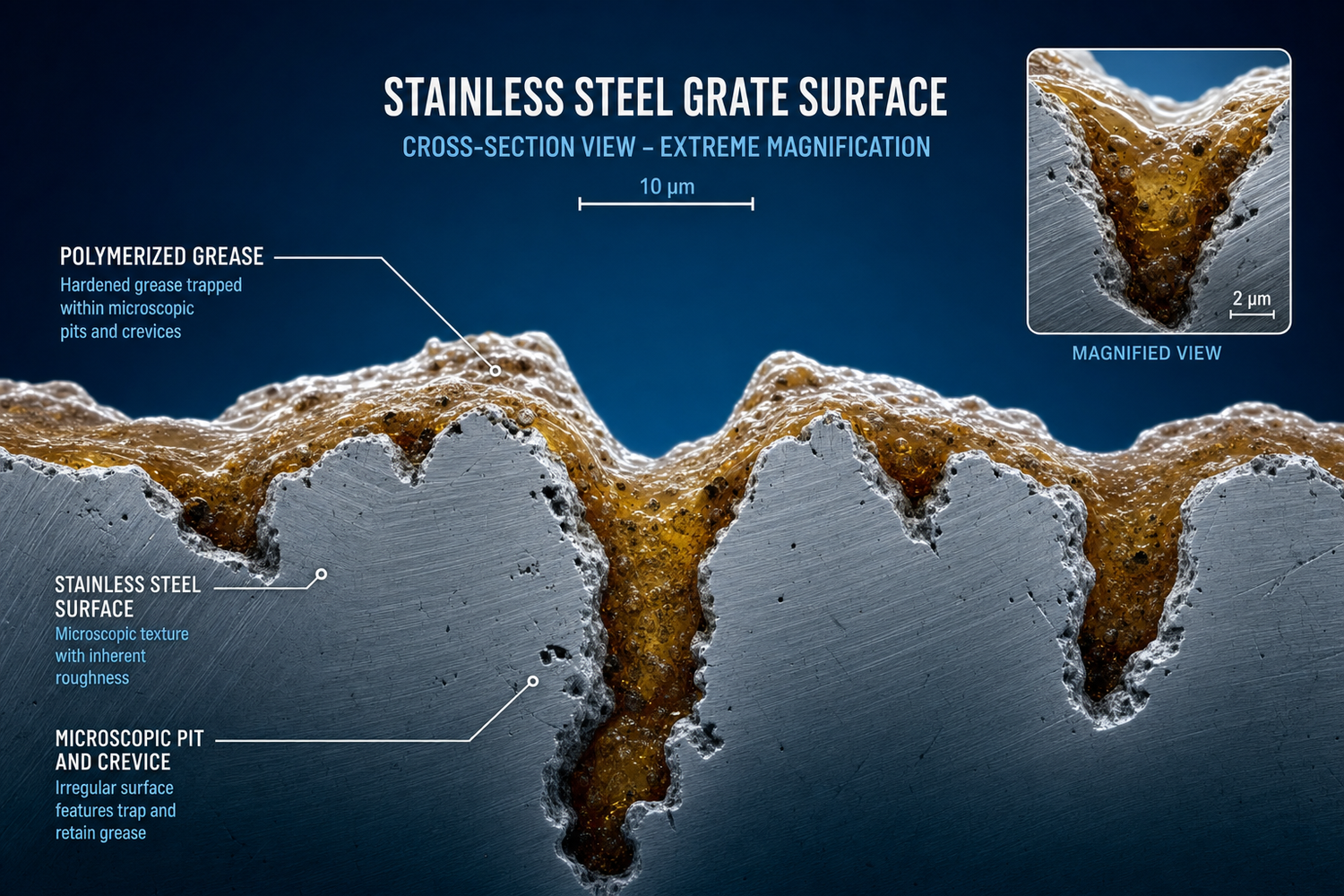
Why Last Summer's Grease Is Still On Your Grates -- The Microscopic Valleys That Turn Cooking Oil Into Chemically Bonded Carbon
Stainless grates look smooth but have 3-micron-deep valleys. Above 350F oil chemically bonds inside them via autoxidative polymerization. Here is the surface-chemistry reason brushing cannot reach the grease -- and what does.

Every "Ceramic" Grill Coating Repels Water -- The Question That Actually Matters Is Whether It Repels Grease
Water beading is the easy half of coating performance. Grease beading is the hard half -- and the only one that matters on a grill. Here is the surface-energy chemistry behind hydrophobic vs oleophobic coatings, and a 60-second oil-drop test you can run on your own grill.
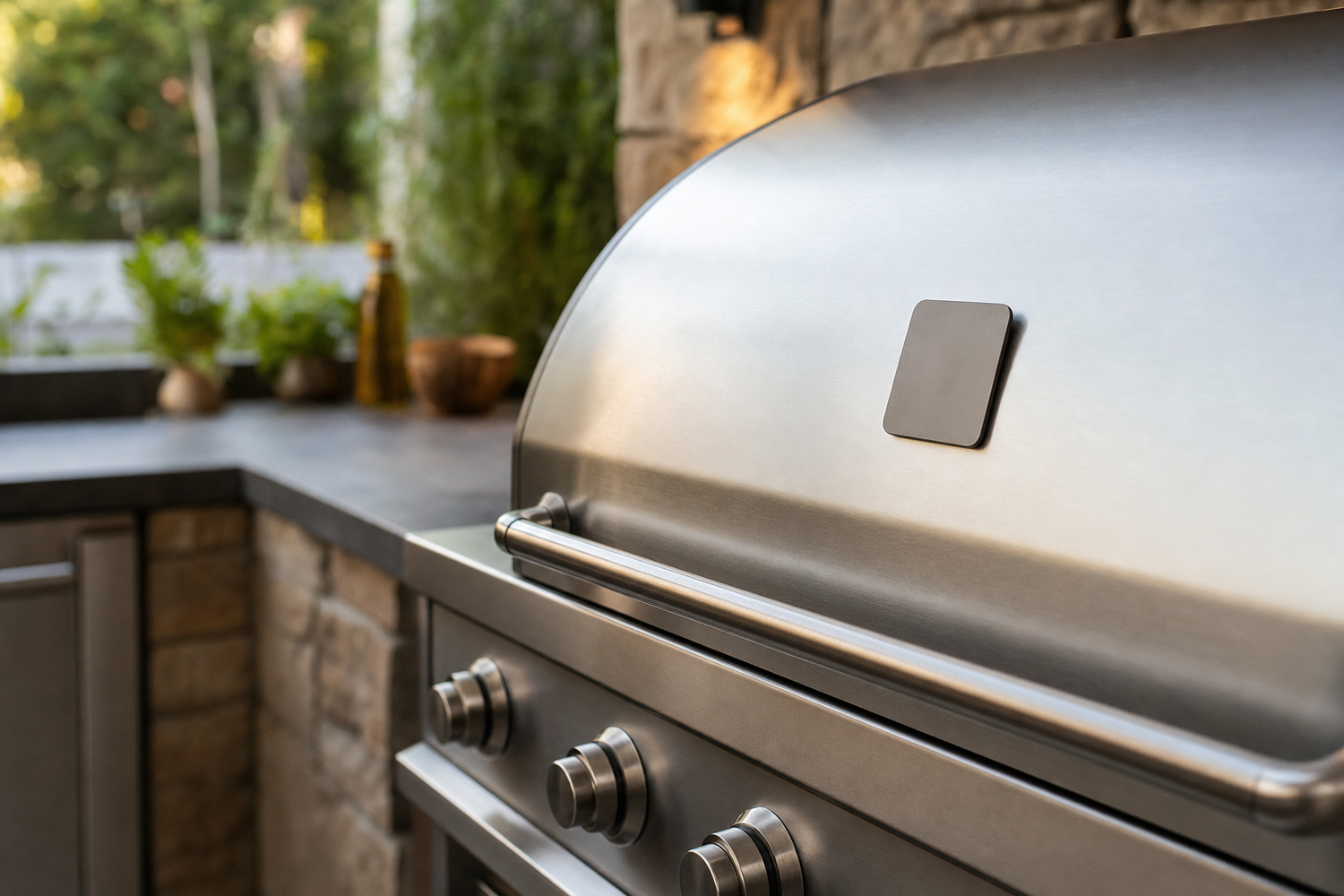
The 5-Second Magnet Test That Tells You If Your "Stainless Steel" Grill Will Rust in 18 Months
Most "stainless steel" grills are not really 304 -- they are 430, the cheaper, magnetic, rust-prone cousin. A fridge magnet tells you in five seconds, and here is what to do when it sticks.
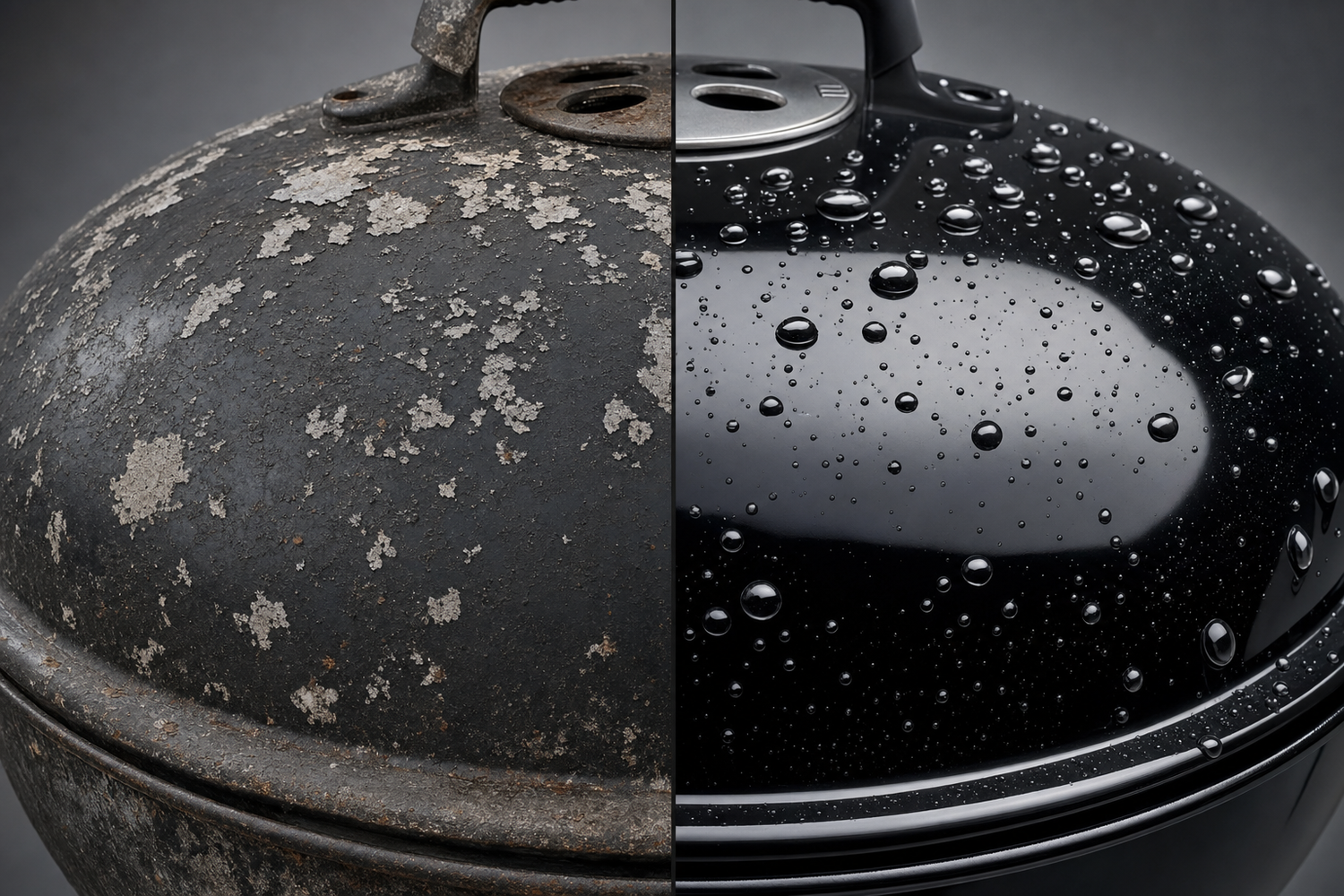
High-Temp Paint vs Ceramic Coating: One Lasts 6 Months. The Other Lasts Years.
High-temp paint sits on top of metal and fails via chalking and flaking within 1-2 seasons. Ceramic coating forms an actual chemical bond with the surface -- same chemistry as industrial glass coatings -- and lasts years. Here is the molecular difference.
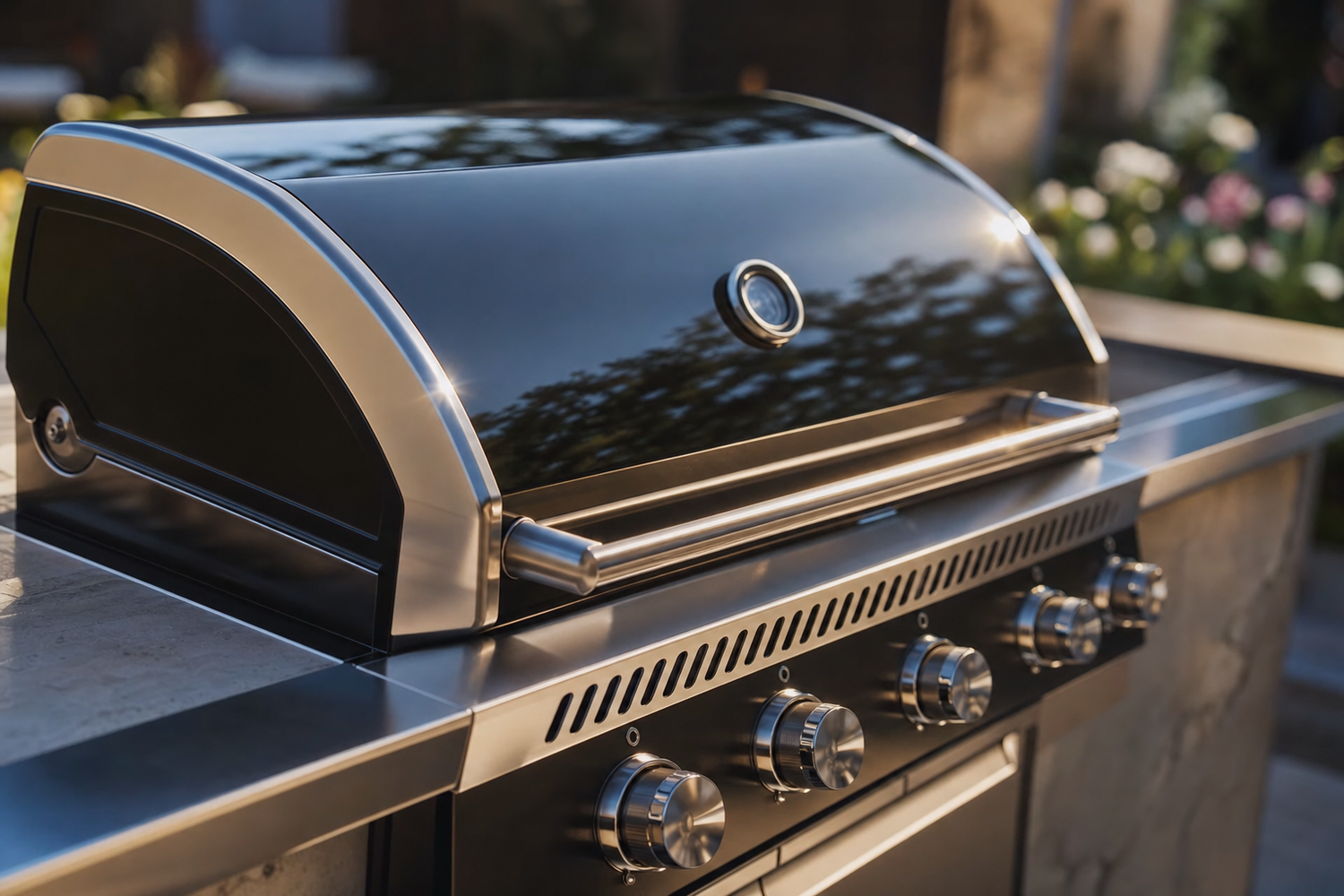
$1,500 for a Ceramic-Coated Car. $119 for a Ceramic-Coated Grill. Same Chemistry, Different Math.
Pro auto ceramic coating runs $1,200 to $2,500 because of paint correction labor -- not the chemistry. Grill substrates skip that step entirely, delivering the same SiO2 bonding technology at a fraction of the cost.